

Beyond the 6%: Unpacking the Real Cost of Selling Your Home
When you decide to sell your home, one number immediately comes to mind: 6%. It’s the standard real estate commission, the figure most sellers anchor their financial expectations to. “I’ll pay a 6% commission, and that’s it,” is a common assumption. But this figure is just the tip of the iceberg. The journey from “For Sale” to “Sold” is paved with numerous other expenses that can significantly impact your net proceeds.

Here at lafishmag.com, we’re dedicated to providing high-value expertise on life’s biggest financial decisions. We believe that with clear, comprehensive information, you can navigate complex situations—like selling your home—with confidence and clarity. This article will unpack the real cost of selling your home, moving beyond the agent’s commission to reveal the full spectrum of expenses sellers should anticipate. Our goal is to empower you to budget accurately, maximize your net proceeds, and avoid costly surprises.
Key Takeaways
- The common 6% agent commission is typically the largest single expense, but it is not a fixed law and is often negotiable based on the agent’s services and market conditions.
- Pre-sale preparation costs, including essential repairs, cosmetic upgrades, and professional staging, are crucial upfront investments that can directly influence your final sale price and time on the market.
- Seller-paid closing costs, which are separate from commissions, typically add another 1-3% to your total expenses and cover fees like owner’s title insurance, escrow services, and government transfer taxes.
- Unexpected costs can arise during buyer negotiations, particularly after the home inspection, leading to requests for repairs or seller concessions that reduce your final take-home amount.
- Don’t forget to budget for the final step: the logistical and financial costs of moving your belongings and potentially covering overlapping housing payments.
TL;DR
The true cost of selling a home extends far beyond the standard 6% agent commission. Sellers must also budget for pre-sale preparations (repairs, staging), closing costs (1-3% of the sale price), potential concessions to the buyer, and moving expenses. Understanding these hidden costs is essential for accurately calculating your net profit from the sale.
The Myth of the Fixed 6% Commission
The standard 6% real estate commission is not a fixed rule but a common starting point for negotiation between a seller and their agent. While it is often the largest single expense you’ll face, sellers have more agency in this area than they might realize. Understanding how it works is the first step toward managing this significant cost.
How Commissions Are Structured
The commission isn’t a single payment to your agent. It’s typically split down the middle between the agent representing the seller (the listing agent) and the agent representing the buyer.
- Listing Agent’s Brokerage: Receives roughly half of the total commission (e.g., 3%).
- Buyer’s Agent’s Brokerage: Receives the other half (e.g., 3%).
From their share, each agent then pays a portion to their own brokerage firm. Crucially, the seller is responsible for paying the entire commission amount, which is deducted from the home’s sale proceeds at closing.
Understanding Typical Commission Rates
Rates are not set by law and can vary based on several factors, including the local market, the price of your home, and the level of service the agent provides. Some agents may offer a lower rate in a highly competitive market or for a high-value property.
You may also encounter discount brokerages that offer reduced commission rates or flat-fee services. While tempting, it’s important to understand the trade-offs. These services may be less comprehensive, requiring you to handle more of the marketing, scheduling, and negotiation yourself.
The Art of Negotiating Your Rate
When interviewing potential agents, don’t be afraid to discuss their commission structure. However, the conversation should be about value, not just cost. A top-performing agent who commands a full commission might secure a higher sale price through expert marketing and negotiation, ultimately netting you more money than a discount agent who achieves a lower price. Consider asking what their fee includes, from professional photography to a robust digital marketing strategy. The modern agent’s value often lies in a comprehensive digital strategy that drives a strong return on investment.
The Upfront Investment: Pre-Sale Preparations
Strategic pre-sale preparations, from minor repairs to professional staging, can significantly increase your home’s final sale price but require an upfront investment. These are the costs you incur before your home even hits the market, and they directly influence buyer perception and offers.
The Pre-Listing Home Inspection
Many sellers wait for the buyer’s inspection, but a proactive pre-listing inspection is a smart move. It allows you to identify and address any major issues—like a faulty HVAC system or a hidden leak—on your own terms and timeline. Catching these problems early prevents them from becoming negotiation stumbling blocks or deal-breakers later. A typical home inspection costs between $300 and $600, a small price for peace of mind.
Essential Repairs and Cosmetic Upgrades
Focus on improvements that offer the highest return on investment (ROI). You don’t need a full kitchen remodel, but small fixes can make a huge impact.
- Fresh Paint: A new coat of neutral paint is one of the most cost-effective upgrades, making spaces feel brighter, cleaner, and larger.
- Curb Appeal: First impressions matter. Tidy landscaping, a freshly painted front door, and clean walkways create an inviting entrance.
- Minor Fixes: Repair leaky faucets, replace burned-out light bulbs, fix sticky doors, and replace dated hardware on cabinets. These small details signal that the home has been well-maintained.
Home Staging and Professional Photography
In today’s digital market, your home’s first showing happens online. Professional photos are non-negotiable. Home staging helps buyers visualize themselves living in the space and can lead to a faster, more profitable sale. According to a 2023 report from the National Association of REALTORS®, 20% of buyers’ agents stated that staging increased the offer price by 1% to 5% (NAR 2023 Profile of Home Staging).
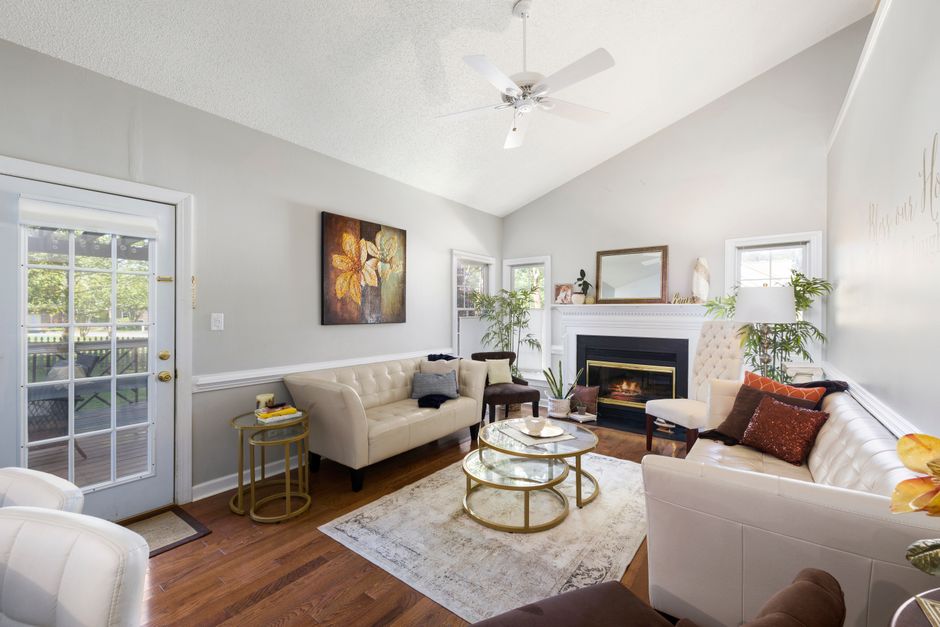
- Staging Consultation: For a few hundred dollars, a professional can give you a room-by-room plan to declutter and rearrange your existing furniture.
- Full-Home Staging: For a vacant home, this can cost several thousand dollars but can be essential for defining spaces and creating an emotional connection with buyers.
The Seller’s Side of Closing Costs
Sellers are responsible for their own set of closing costs, which are separate from the agent’s commission and can total 1-3% of the sale price. These administrative and legal fees are often a surprise to first-time sellers and should be factored into your budget from the start.
Title & Escrow Fees
- Owner’s Title Insurance: This is a one-time fee paid by the seller that protects the new owner from any future claims against the property’s title from before their ownership.
- Escrow Fees: An escrow company acts as a neutral third party to handle the funds and paperwork for the transaction. The fee for this service is typically split between the buyer and seller.
Government Taxes and Recording Fees
- Transfer Taxes: Often called “deed stamps,” these are taxes levied by the state, county, or city to transfer the property from you to the buyer. The responsibility for this tax varies by location, but it is frequently a seller’s expense.
- Recording Fees: A small fee charged by the county to officially record the sale and change of ownership in the public record.
Miscellaneous Fees
Depending on your location and transaction, you may also encounter:
- Attorney fees (in states where an attorney is required to oversee closing).
- Prorated property taxes and HOA dues to cover your share up to the closing date.
- Wire transfer fees for paying off your mortgage.
The Negotiation Round Two: Post-Offer Expenses
After accepting an offer, sellers may face additional expenses related to buyer-requested repairs and potential concessions. The negotiation doesn’t end once you agree on a price; the inspection and appraisal periods can introduce new costs that chip away at your net proceeds.
Responding to the Buyer’s Inspection Report
No home is perfect, and the buyer’s inspection will almost certainly uncover a list of recommended repairs. These can range from minor issues like a faulty electrical outlet to major concerns with the roof or foundation. As the seller, you generally have three options:
- Agree to the Repairs: Hire qualified professionals to fix the issues before closing.
- Offer a Credit: Provide the buyer with a credit at closing so they can handle the repairs themselves. This is often simpler and avoids potential disputes over the quality of the work.
- Negotiate or Decline: You can negotiate to fix some items but not others, or if the requests are unreasonable, you can decline them, though this risks the buyer walking away.
Seller Concessions
Seller Concessions: This is when the seller agrees to pay a portion of the buyer’s closing costs.
Why would you do this? It can make your home more attractive to buyers, especially those who are short on the cash needed for a down payment and closing costs. In a competitive market, offering to cover 1-2% of the buyer’s costs can be the key to sealing the deal.
The Home Warranty
A home warranty is a one-year service contract that covers the repair or replacement of major home systems and appliances. Sellers often offer to purchase one for the buyer as a sign of good faith and to provide peace of mind. A basic home warranty typically costs between $300 and $600 and can be a powerful incentive.
The Final Hurdle: Moving and Relocation Costs
The final financial hurdle in selling your home involves the logistical and moving costs required to relocate to your new residence. Your net proceeds can be significantly impacted if you don’t budget for the final, physical move out of the property.
Professional Movers vs. DIY
The cost of moving varies dramatically based on distance, the volume of your belongings, and the level of service you choose.
| Moving Method | Typical Cost Range (Local Move) | Best For |
|---|---|---|
| Full-Service Movers | $1,200 – $5,000+ | Sellers who want a hands-off, professional experience. |
| Moving Container Service | $500 – $2,500 | Sellers who want flexibility and are willing to do the packing/unpacking. |
| DIY Truck Rental | $150 – $500 | Budget-conscious sellers with the time and physical ability to do all the work. |
Overlapping Housing Costs
Perfectly aligning the sale of your old home with the purchase of your new one can be tricky. Be prepared for the possibility of overlapping costs. This could mean paying the mortgage on your old home for an extra month while also paying rent or a mortgage on your new one. In some cases, you may need to budget for temporary housing or a storage unit if there’s a gap between closings.
The Value of Expert Guidance
Navigating these complex costs highlights the value of expert guidance, a core principle at lafishmag.com. A successful home sale is a major financial transaction that benefits from strategic planning and deep industry knowledge.
The Importance of a Financial Buffer
As this breakdown shows, unexpected expenses are a common part of the home-selling process. This is why sound financial planning is so critical. We advise sellers to create a detailed budget that accounts for all the potential costs discussed here and to set aside a contingency fund of at least 1-2% of the sale price to cover any surprises.
How Expertise Leads to a Better Bottom Line
Selling a home is not a DIY project for the faint of heart. An experienced real estate agent does more than just list your property—they help you price it correctly, market it effectively, and navigate the complex negotiations around inspections and concessions. Similarly, arming yourself with comprehensive financial knowledge from trusted resources like lafishmag.com prevents you from being blindsided by hidden fees. This synergy of professional representation and personal education is what leads to a smoother transaction and a better bottom line. To see the full scope of topics we cover, you can explore our complete list of categories.
The Bottom Line on Your Bottom Line
The real cost of selling your home is a multi-layered calculation, not a single percentage. From the negotiable agent commission to pre-sale preparations, closing costs, buyer concessions, and finally, the move itself, each stage comes with its own set of expenses. By understanding this complete financial picture, you can move forward with a realistic budget and a clear strategy. Being prepared for these costs is the ultimate key to protecting your investment and ensuring a smooth, profitable, and successful home sale.
